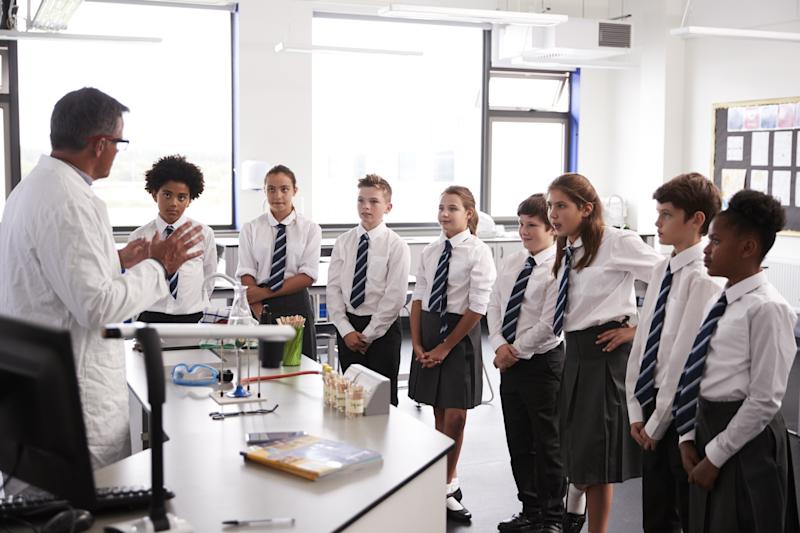
Settling into Secondary School
Settling into Secondary School is a four-year programme that includes research into how schools, parents and carers can best support students throughout Year 7.
Key information
Lead investigators: Melissa Cortina and Roisin McEvoy
Funder: Bukhman Philanthropies
Duration: 4 years, from 2025-2029

Background to the programme
The transition from primary to secondary school can be challenging for many young people. It’s a time when students may begin to disengage from school, attendance may drop, and social, emotional, and mental health difficulties can emerge.
Despite the importance of this transition, students’ own perspectives are rarely explored, and there is currently no national framework to guide schools in supporting students through this period. As concerns about children and young people’s mental health and wellbeing continue to grow, there is increasing recognition of the need for a more holistic approach that supports student development throughout this transition.
About Settling into Secondary School
Settling into Secondary School is a four-year programme exploring how schools, parents and carers can support students throughout Year 7.
After each phase of the programme, we will publish key findings alongside recommendations for policymakers and schools on how to better support students through the transition from primary to secondary school.
This report presents findings from the first phase of the programme, during which we used focus groups to explore students’ experiences of starting secondary school and identify opportunities to strengthen support.
Our findings provide a first step towards developing a national framework for supporting student wellbeing through this transition, with students’ voices at its heart.
Aims of the study

Understand students' experiences
Explore the transition from primary to secondary school, focusing on wellbeing, belonging and engagement.

Identify what helps students settle
Identify the factors that help students settle, build confidence and thrive throughout Year 7.

Develop practical support
Use the evidence to develop a framework, resources and training for schools and families.
Phase one - listening to students
The first phase of the programme sought to understand students’ experiences of moving from primary to secondary school, including what helps them settle in and the challenges they face.
Specifically, phase one aimed to:
explore students’ experiences of their first year at secondary school
put students’ voices at the centre of understanding the transition
identify what supports wellbeing, resilience, belonging and engagement
better understand the challenges students face during this period
generate evidence to inform school practice, training and policy development.
This first phase focused on hearing directly from Year 8 students as they reflect on their experiences of starting secondary school.
Download the reportKey findings
We identified five key themes, which highlight the need for sustained support throughout Year 7, allowing belonging, confidence and engagement to develop over time.
-
Navigating secondary school can feel overwhelming
Students often reported feeling overwhelmed by the size, structure and complexity of secondary school. Navigating new routines, expectations and environments could feel daunting, particularly in the first few months.
-
Belonging can't be assumed
Students described pressure to be accepted by peers, anxiety about first impressions, uncertainty about how to form new friendships in an unfamiliar social environment, and worries about being judged by others.
-
Students need to feel seen, heard and treated fairly
Students valued teachers who were approachable, listened to their concerns and responded supportively when they needed help.
-
Independence requires support, not just expectation
Students highlighted a tension between being expected to become more independent while having limited opportunities for choice and control. Feeling unable to influence aspects of school life could affect their wellbeing, engagement and relationships with staff.
-
Transition is a process, not a single event
Despite the challenges encountered during the early stages of transition, most students reported that the move to secondary school became easier over time.

What do these results mean?
The findings point to a need to rethink how transition support is designed and delivered.
National and local education policy should recognise the start of secondary school as a critical period for wellbeing, belonging and engagement. Support should extend through Year 7 rather than focusing primarily on induction and academic readiness at the start of the school year.
Our research suggests that schools should consider how their policies and practices support:
student wellbeing and mental health
belonging and inclusion
motivation and engagement
positive relationships between students and staff
opportunities for student autonomy and choice.
Taking account of these factors alongside traditional educational measures could help schools develop a more complete understanding of students’ experiences and identify where additional support may be needed.
Next steps
In the next phase of this programme, commencing in 2027, we will:
gather the perspectives of parents and carers
identify examples of effective transition practice from schools
explore what helps students settle into secondary school across different settings and communities
develop practical tools, training and resources for schools
create an evidence-informed transition framework that can be shared nationally.
The framework will be designed to complement the government’s proposed Pupil Engagement Framework, providing guidance to help schools better support students’ wellbeing, belonging and engagement throughout their transition to secondary school.
Key findings reports
-
Seen, heard and supported
DownloadDownload the 2026 'Seen, heard and supported' report for Settling into Secondary School.
Meet the research and delivery team

Roisin McEvoy
Head of Training and National Programmes (Schools)

Melissa Cortina
Senior Research Fellow

Laura Cliff
Project Manager

Arlene McCloskey
School Engagement Trainer

Josie Williams
School Engagement Trainer

Dr Julia Clements
School Engagement Trainer

Giulia Ravaccia
Research Officer

Madihah Iqbal
Research Officer
Our funder

You may also be interested in
-
Mental health training for schools and colleges
Develop the skills to support student’s mental health and wellbeing with our evidence-based training courses for education staff.
-
Mental health support for schools and colleges
Discover the resources, webinars, training and clinical support available to help you support the mental health of your students.
-
School and college resources
Explore our free mental health resources for families and education professionals working in primary, secondary and further education settings.