Children’s Commissioner visits Anna Freud
We were pleased to welcome Dame Rachel de Souza, the Children’s Commissioner for England, to Anna Freud to discuss how we can better support neurodivergent children and young people, and those with SEND.
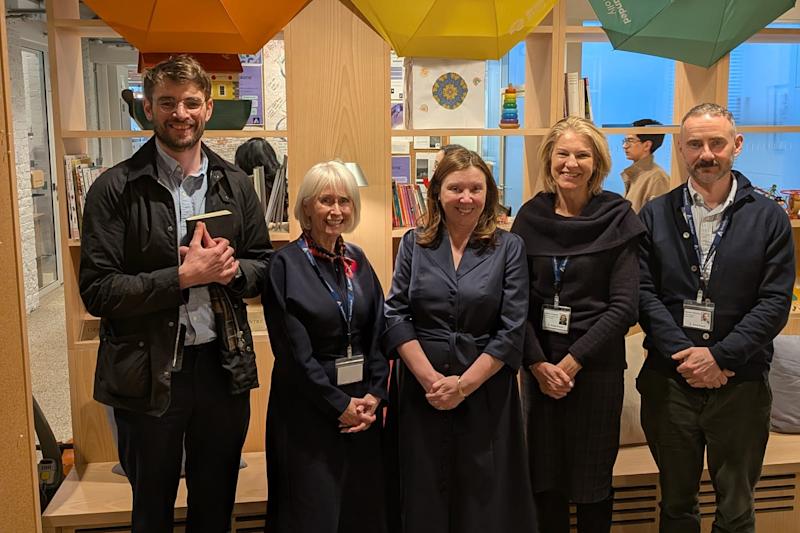
We welcomed Dame Rachel de Souza, the Children’s Commissioner for England, to Anna Freud on Wednesday 25 March to share learning on how government and civil society can best support neurodivergent children and young people and those with special educational needs and disabilities (SEND).
Dame Rachel spent time speaking to a family receiving clinical support from Anna Freud before a roundtable discussion with CEO, Professor Eamon McCrory; Deputy CEO and Director of Education and Training, Claire Evans; and Director of Schools and Clinical Practice, Dr Lesley French.
Among the topics discussed were:
Autism Central – England’s national peer support programme for the families, carers and others in the support networks of autistic people delivered by Anna Freud and commissioned by NHS England.
The impact of community, relationships and digital media on children and young people’s mental health, in particular, how social thinning and a decline in the physical and relational spaces that support social development is changing young people’s experience growing up.
Our support for children and young people in school settings. In 2024/25, our Schools and Colleges Early Support Service provided online help to more than 600 school students as well as education staff, parents and carers in 2024/25.
The Children’s Commissioners’ visit coincided with the current government consultation on SEND reform, which Anna Freud is in the process of responding to. In this blog, we welcomed the consultation and broader schools white paper but shared concerns about workforce capacity and training, the integration of mental health support and the proposed reforms to education, health and care plans (EHCPs).
One in seven children in the UK are estimated to be neurodivergent and, compared with neurotypical children, are at increased risk of mental health and wellbeing challenges, including difficulties at school.

Professor Eamon McCrory said:
“We all have a role to play in creating a more inclusive world, in particular for SEND and neurodivergent children, young people and adults, and we welcomed the opportunity to share our learning and insights with the Children’s Commissioner.
“Anna Freud is a pioneering mental health charity, dedicated to transforming care for children and young people through science, collaboration and clinical innovation. And collaboration really is the key.
“By sharing learning from some of our projects which are grounded in research and understanding, such as Autism Central, we’re able to lift the voices of young people and ensure the practice wisdom of the professionals and families we work with and support are part of the national debate.”
Children’s Commissioner Dame Rachel de Souza said:
“It was a privilege to visit Anna Freud and see first-hand how much of a difference getting early, evidence-based support can make to children’s mental health, particularly those who have wider additional needs and neurodivergence.
“It was clear that the families they work with feel equipped, supported and understood, serving as a powerful reminder that the right help, delivered when it is needed, can change a child’s experience and transform their outcomes.”
Anna Freud has aimed to understand the challenges facing children, young people and families - including those in more vulnerable positions or who may be underserved by systems designed around neurotypical needs - for over 70 years to improve their wellbeing and ensure access to mental health support when needed.
We help people get the right support at the right time. By creating fresh, innovative approaches to mental health care, we provide the tools children, young people and families need to thrive.
Read more about how we believe the erosion of social infrastructure is impacting on children and young people’s mental health in this blog from our CEO.