'Young people are the future: when I get opportunities to share my voice, it's great'
We go behind the scenes of the Growing Up in the 2020s study to hear from a young person, parent and teachers supporting the project.
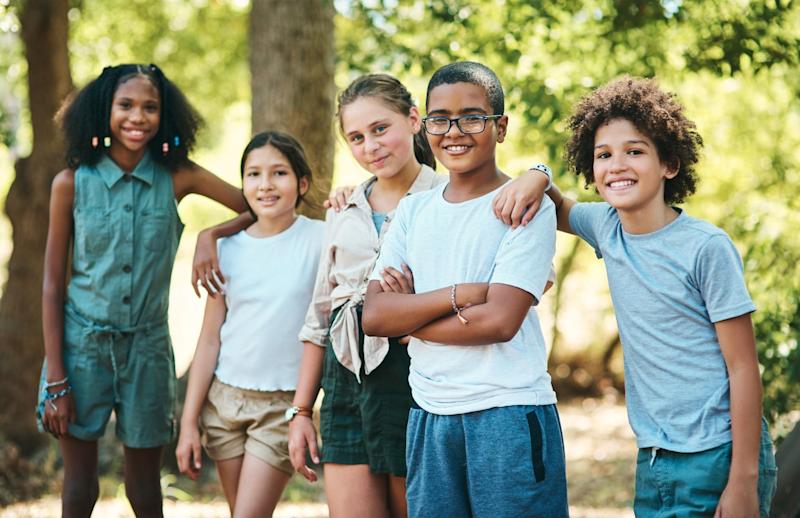
Earlier this month, we published results from the first wave of Growing Up in the 2020s, a study tracking the lives of 8,000 young people in secondary state schools across England over five years. The project is commissioned by the Department for Education (DfE) and led by Anna Freud, in partnership with University College London (UCL) and Ipsos.
Lots of the results from this wave were positive, with most young people reporting positive relationships with family and friends, high life satisfaction, and positive experiences of school. However, we also found that one in four Year 8 students in England have a probable mental health condition, along with clear and consistent inequalities affecting different parts of life for many young people.
At Anna Freud, we are committed to listening to and learning from the voices of children, young people, parents and carers in all aspects of our work. Here, we go behind the scenes of Growing up in the 2020s and hear from people in our three advisory groups who are helping to ensure the study is accessible and relevant for the young people, families and education professionals taking part. We're incredibly grateful for their guidance and expertise.
Over to Dilly, a young person, Jo and Martin, both education professionals, and Shar, a parent, to tell us how they got involved, and what they hope happens with the findings.

From left to right: Dilly, Shar and Jo.
Why did you want to get involved?
Dilly: "Young people’s voices are so important – we are the future - but I don’t think there are always lots of opportunities for us share our views. When I get to have opportunities to share my voice and for it be valued and appreciated, it's great."
Shar: “I think it is really important that parents and carers have a genuine voice when research is being done about children and families. They can highlight things that might not have been considered and ask questions from a different perspective.”
Jo: “The better we understand a child's world, the better we can support them. Knowing that this study will capture such valuable data and insight into what it is really like to grow up in the 2020s is incredible to be part of.”
Martin: “As a teacher, I see every day that young people are navigating a world fundamentally different from the one I grew up in. By tracking thousands of students over time and exploring the views of educators and parents, this study does not just look at the issue from a distance, it acts like a magnifying glass. It brings the close up, lived stories of individual students into sharper focus, showing how modern life shapes children’s present experience and how their futures may be moulded as a consequence.”
What has it been like being part of the advisory group?
Dilly: “It's meant a lot because I think I get to speak with so many incredible people. I also really enjoyed how much the staff at Anna Freud listen to you and take in your thoughts. You can tell they really value your opinion.”
Shar: “It has given me the opportunity to share my views, but also to listen to other parents and carers who may have completely different experiences from my own. We don't always agree, but I think that's important, because families are different and research should reflect that.”
Jo: “I thoroughly enjoy being part of the advisory group and sharing my experience from working within education and children and young people's mental health, while also learning from the experiences and perspectives of others within the group.”
Martin: “Offering educational professionals the chance to be part of an advisory group ensures the study more accurately reflects what young people are experiencing. My perspective as an educator was taken on board, helping to shape the research that has taken place and support future educational policy.”
Why does this study matter to you?
Dilly: “I think this project is important because we need to see where we're not supporting young people, and step in before problems get any worse. By seeing where we’re failing or succeeding, we can implement change where needed or continue what works.”
Martin: “This study offers invaluable information for educators, as it offers clear insight into what young people are actually experiencing. In my classroom, I witness young people wrestle daily with the implications of the pandemic and the exhausting, non-stop pressure of a highly digital life, along with the impact that has on their mental wellbeing.”
Jo: “Children are growing up in a world that is changing so quickly, and we need a much better understanding of this. From education and relationships to social media, technology and the wider pressures they face, their experiences can be very different from those of previous generations.”
Shar: “As a parent and youth and community worker, I see how much young people’s wellbeing is affected by their home life, education and the support available to them. This study matters to me because I want families from different backgrounds, especially those whose voices are often overlooked, to be heard and their experiences understood.”
What do you hope happens with the findings?
Dilly: “I’m neurodivergent and had a tough time at school. There was some support in place, but it didn’t allow me to thrive. I hope sharing my views will help change things for others in the future.”
Martin: “I want to see the findings used to support schools with the evidence needed to build stronger support systems, advocate for better resources, and continue to develop learning environments where children can find their own way through an increasingly complicated and confusing world.”
Jo: “I hope the findings help us listen more closely to young people, understand their world through their eyes, and use that understanding to shape the support we provide now and in the future.”
Shar: “That they don't just sit in a report, but are actually listened to and used to help improve the way children and families are understood and supported in the future.”
Final thoughts?
Dilly: “Young people deserve a little bit more grace. There are so many factors that are hard at the moment and I think young people get misunderstood a lot.”
Find out more
Read more about Growing Up in the 2020s, including results from the first wave of the study.
We are always looking for people to share their opinions, experiences and ideas with us so that we can turn this evidence into action to improve mental health support and services.
Parents, carers and young people with experience of mental ill health can join our Champions programme. Professionals can sign-up to our newsletters to hear more about our work and participation opportunities.