Going back to nursery after a break
We look at some of the measures you can take to support parents, carers and their children with the transition back to nursery following a break.

Supporting children and families
While many early years settings are open 51 weeks a year, school-based nurseries will stick to term times, which means children need to re-settle following each holiday period. Other children will experience significant gaps in their time at nursery due to illness, changing family circumstances or simply being taken out on holiday.
Each change in routine requires the child to re-settle. For some children this is no problem, while others will need more support, particularly if they have been away for a few weeks or even months. A young child does not yet have a fully developed sense of time, so this can feel like a significant period of separation.
Below, we’ve listed some of the measures you can take to support parents, carers and their children with the transition. Some can be taken in the period before a child returns following a significant break, while others can take place once the new start begins.
Make contact with children before they return
Early years settings can encourage key workers to connect with children (plus parents and carers). This could be via phone calls, emails, letters, online meetings, or recorded video messages. For instance, for babies and younger toddlers, contact via digital platforms could involve waving ‘hello’ and singing a nursery rhyme.
Parents and carers can also be invited to send pictures of activities or drawings to keyworkers, to help them stay in touch with the child’s experiences.
If a child’s keyworker is expected to change, this should be explained to the child in an age appropriate way before they come back to nursery, and they should have the chance to meet the new worker in the ways suggested above.
Talk about nursery and the child's key worker
Once a return date has been confirmed, keyworkers should encourage parents and carers to start talking to their babies and children about their nursery, while regularly using the main keyworker’s name. This will help reintroduce the idea of nursery and this special person.
Use a countdown to nursery calendar
Suggest that parents and carers create a countdown to nursery calendar. Toddlers and preschoolers can benefit from counting down the days using a visual timetable or calendar. This preparation provides a sense of predictability and security in the runup to their return.
Have a catch up phone call
Keyworkers can arrange a phone call or meeting with parents and carers, to review any issues that may have arisen during the break from the nursery. As well as getting a general sense of how the baby, toddler or young child is doing, it is helpful for keyworkers to be informed of any difficult experiences or changes in circumstances. Having a sense of the baby’s or child’s experiences will help keyworkers when trying to understand children’s needs and communications after they return.

Actions to take once children return
Depending on the length of time away from the nursery, babies, toddlers and children may need another settling in period. While some parents and carers, and certain children, may be keen to get back to their old routine, many will benefit from being given the opportunity to settle back in gently and at their own pace. This will foster their sense of security in their childcare setting and enable them to re-establish their connection to their keyworker.
Keyworkers should prepare parents and carers that it may feel as if they are starting again with the process of settling their child. They should reassure them that this is normal and to be expected.
Use transition objects
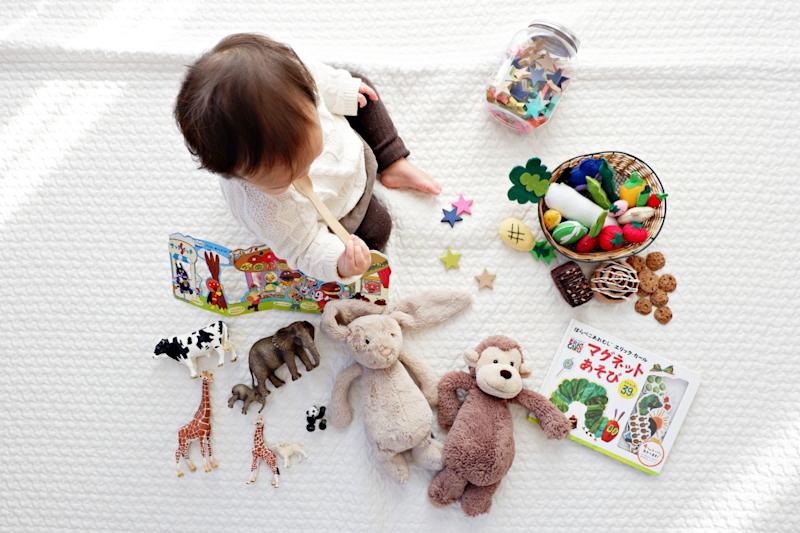
Encourage the use of a transitional object from home (where your childcare setting allows it). As with home visits and settling in periods, a familiar toy or object from home can be a bridge which helps the child cope more easily with the separation from their home and their parents or carers. It will also help with the transition to being back in the care of their keyworker and foster their sense of security. If possible, encourage your child to choose something that can be cleaned on arrival.
Keep familiar routines
Keyworkers should try to maintain as many familiar routines as possible. Experiencing sudden or unexpected changes can be unsettling and undermine a baby or young child’s growing sense of control over themselves, their experiences and relationships. It can also shake their capacity to engage in and learn from the world around them. Being able to slip back into predictable and consistent routines can counteract this and support the child’s growing sense of mastery over themselves and their environment.
Talk openly about any changes
If there have been changes to the physical space or routine in the nursery, talk openly to the children about these. Acknowledge that it may feel strange and different, and take some time to get used to. Although younger babies will not be able to tell you directly about their experience of changes, keyworkers should keep in mind that even the youngest children register differences in their environment. Having an awareness of this is important - it will help keyworkers stay attuned to babies’ communications after they return to nursery.
Help work through negative feelings
Some children may feel anxious about the change in their routine and upset about leaving their parents or other caregivers. It will be helpful if children can feel able to express these feelings without worrying that they will upset the adults who care for them. Some children may be able to directly communicate feelings through play or words but others, particularly babies and younger toddlers, may communicate worry, sadness or anger through their behaviour. Look out for changes in eating or sleeping patterns or an increase in tantrums or separation anxiety. Keyworkers can help by trying to verbalise any difficult feelings that children may be experiencing, such as being worried, sad or cross.
Explore our Early Years Resources
-
Early Years in Mind
A free online network for early years practitioners.

-
Common difficulties in the early years
Exploring a range of difficulties children can experience.
-
Early years staff wellbeing: a resource for managers and teams
Early years staff love their work, but it can be emotionally demanding & stressful. Our latest early years resource shows that staff wellbeing needs to lie at the heart of nursery settin...
